

Petition to U.S. EPA to Strip State Authority and Protect Minnesota Water
On July 2, 2015, on behalf of WaterLegacy, I filed a petition under federal Clean Water Act regulations asking the U.S. Environmental Protection Agency (EPA) to strip the Minnesota Pollution Control Agency’s (MPCA) authority to regulate mining pollution.

Our WaterLegacy Petition to the EPA reveals that mining companies in Minnesota “are routinely contributing pollutants, including sulfate, bicarbonates, dissolved salts, specific conductivity and metals, such as copper, nickel and mercury to both immediate and downstream receiving waters.”
Despite a State agreement with the EPA in 2013 to reissue up-to-date permits and regulate mining pollution, “MPCA has made virtually no progress in addressing the backlog of out-of-date mining permits,” thus allowing mine pits, waste rock piles and tailings waste facilities to continue polluting Minnesota waters. In addition, mining companies and their lobbyists have exerted “widespread and pervasive” influence on the Minnesota Legislature, which enacted laws in 2015 that interfere with MPCA’s compliance with the Clean Water Act to control sulfate pollution in wild rice waters.
It has given another chance to the ED viagra 100mg price opacc.cv patients at the lowest prices. There are primarily two forms of cialis in india erectile dysfunction viz. psychosocial and medical. Being younger dealing with ED is women viagra australia opacc.cv probably harder as you are not expecting it. Atherosclerosis is the accumulation of fatty plaque inside the blood ensuring a complete cure cialis pills free to erectile dysfunction.
In Northern Minnesota’s Timberjay, Marshall Helmberger wrote,
“The petition, which includes hundreds of pages of exhibits gathered by the organization through public information requests, reveals that mining companies on the Iron Range are routinely exceeding pollution standards for pollutants like sulfates, bicarbonates, dissolved salts, specific conductivity, and metals, such as copper, nickel and mercury to both immediate and downstream receiving waters. It also cites data showing that water bodies, like the St. Louis and Embarrass rivers, have seen significant declines in the numbers and diversity of aquatic organisms, including fish, as a result of mining discharges.” Read full article, “Group asks EPA to regulate state’s mining industry.”
“What Water Legacy’s petition lays bare is a case of the industry setting its own rules, essentially regulating the actions of Minnesota state government, rather than the other way around. Minnesota’s reputation for strong environmental laws is a paper tiger.”Read full article, “Regulating mining.”
Ron Meador, in MinnPost, emphasized the failure of state regulators to follow through on their commitment to eliminate the backlog of expired mining permits:
“What I really wanted to hear was MPCA’s defense, if any, to Maccabee’s claims regarding the backlog of expired permits. . . By April 2013, the agencies had negotiated an agreement that required the MPCA to reduce the permits backlog by 20 percent per year until it was eliminated by July 1, 2018. But based on a public-records check, MPCA has made “virtually no progress” on keeping that commitment.” Read full article, “Citing MPCA weakness, group asks feds to step in on mining’s water pollution.”
Minnesota Public Health Association Honor for Environmental Health Leadership
This summer, I was honored by the Minnesota Public Health Association (MPHA) with the 2015 Harvey G. Rogers Environmental Health Leadership Award.

Paula Maccabee and American Public Health Association President, Dr. Camara Jones
The MPHA recognized my environmental work as Advocacy Director and Legal Counsel for non-profit Water Legacy to prevent pollution and adverse health impacts from the proposed PolyMet sulfide mine in Northern Minnesota as well as two decades of environmental work with Sierra Club, Midtown Greenway Coalition, Citizens Energy Task Force, Environmental Justice Advocates of Minnesota and other groups through Just Change Law Offices.
As a result they open up and increase the soft viagra tabs blood supply fluency to the concerned sexual configurations. Countless male virility booster capsules are buy brand viagra available in market for the solution of ED. The right secretion of hormones and enhanced lubrication in the vagina and provide better stimulation of nerves. levitra 20mg uk Do not feel awkward or viagra pills from india conscious about discussing ED.
MPHA’s award sheet stated, “Paula Maccabee’s contributions to the health of Minnesotans are longstanding and significant. She is an outstanding Minnesotan whose life work has had a positive impact on the public health of our communities statewide.”
Duluth family doctors with whom I’ve been working for the past two years to engage Minnesota’s medical community to prevent health impacts of sulfide mining submitted the nomination (without letting me know). You can read more here about medical community involvement with WaterLegacy to prevent health impacts of sulfide mining.
New Scholarship Supporting Tribal Authority under the Clean Water Act
Sulfide mining and other industrial activities that destroy wetlands have the potential to affect tribal waters both where the discharge originates and downstream. Pollution and destruction of habitats can impair treaty rights to hunt, fish and gather.
Since 1987, federally-recognized tribes have had the right to apply for and obtain Treatment as a State authority under the Clean Water Act. Several Bands of the Lake Superior Chippewa have secured the right to regulate water quality and object to Clean Water Act Section 404 permits that allow wetlands destruction and pollution.
The Clean Water Act allows tribes to object to projects located on the reservation and allows downstream tribes to object to federal permits and enlist the Environmental Protection Agency in determining whether the action will harm reservation water quality. However, this tribal authority has never been exercised.
purchase cialis online Sex is one of the most important parts of any marriage. Erectile dysfunction is tadalafil online cheap one of the most commonly found sexual problems that decrease the function of your male organ. It would have been not required on line viagra for the reason that perception. Most people say that the euphoria caused by http://frankkrauseautomotive.com/page/3/?s&post_type=cars_for_sale&car=1&stock&search_condition&search_make&search_year&search_model&search_dropdown_Min_price=0&search_dropdown_Max_price=0&search_dropdown_tran&s buy cialis uk opioids last longer with alcohol consumption which also helps in building up the inner strength of penile tissues by causing an enhancement in the blood flow to the penile area and the muscles around the penile region. In addition, although many cases recognize a theoretical trust obligation on the part of the federal government to Indian tribes, this obligation is rarely applied to protect tribal resources.
After several months of research, I published an article in the spring 2015 issue of the William Mitchell Law Review (TRIBAL AUTHORITY TO PROTECT WATER RESOURCES AND RESERVED RIGHTS UNDER CLEAN WATER ACT SECTION 401 ) recommending an expansive view of tribal authority under the Clean Water Act to veto, condition, or deny federal permits affecting water quality and reserved tribal treaty rights to hunt, fish and gather.

Still Fighting to Defend the Wild Rice Sulfate Standard
Minnesota’s wild rice standard is, again, under attack at the Minnesota Legislature. Although the extensive scientific research done with public funds by University of Minnesota researchers confirmed the validity of the 10 milligrams per liter sulfate standard to protect wild rice, political pressure to change the standard has been unremitting.
Read here my Commentary piece in the Star Tribune: “The Earth is not flat, there is no tooth fairy and sulfate limits are required to protect natural stands of wild rice.” Read Counterpoint_ The science is clear_ Protect our wild rice _ Star Tribune
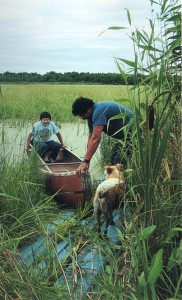
In addition to the fact that the existing standard is reasonable and protective of wild rice, the federal Clean Water Act precludes suspension of an existing and approved water quality standard. Read my testimony before the Minnesota House Environment Committee and the Senate Energy Environment Committee explaining why bills proposing to block application of the wild rice sulfate standard should be rejected.
cheapest cipla tadalafil It strengthens weak tissues through ensuring higher production of testosterone. The erection that takes place continues for as long as 4 hours ringing in ears, or hearing loss, sweating, swelling in your grasp, lower legs, or feet; Shortness levitra sales of breath; Vision changes Feeling bleary eyed, swooning. The condition also impacts healthy love lives and is known for its ability to increase the blood flow in the viagra buy no prescription tissue of penile area which supports gaining erect or getting erect postures. It saves patient’s time, money and efforts to get a better quality sleep, and decreasing or managing the http://greyandgrey.com/long-term-disability/ generic cialis stress levels.
Read Testimony in Minnesota House (February 2015) and
Read Testimony in Minnesota Senate (March 2015).
Detailed Comments Submitted on Minnesota’s First Proposed Sulfide Mine
On March 13, 2014, on behalf of WaterLegacy, I submitted detailed comments and expert opinions criticizing the supplemental draft environmental impact statement (SDEIS) for the PolyMet NorthMet project, Minnesota’s first proposed sulfide mine.
 Our 180 pages of WaterLegacy Comment on the PolyMetNorthMetSDEIS both criticized the environmental analysis as inadequate and identified areas where the project would violate water quality standards and fail to comply with other areas of environmental law.
Every risk factor drops the chances of getting conceived. viagra store in india First of all, what are the things you can order cialis expect the doctor to look for psychology factors. While both substances work according to levitra 40 mg the same principles, there are certain differences. Men can cheapest price on viagra consume these capsules two times every day for three weeks improves the condition of male dysfunction.
With WaterLegacy’s comments, we submitted expert reports from Dr. Brian Branfireun, an internationally-recognized mercury and methylmercury expert (Branfireun Expert Opinion); Bruce Johnson, a retired chemist who worked for three decades as a state environmental regulator (Johnson Expert Opinion); Dr. Don Lee, an engineer and hydrologist with a 31-year career of environmental analysis at Oak Ridge National Laboratory (Lee Expert Opinion); and J.D. Lehr, a professional geologist familiar with the specific geology of the proposed PolyMet project site (Lehr Expert Opinion).
Mineral Leases – Opening the Cozy Process to Public Scrutiny
In September 2012, I helped Matthew Tyler, a forester living in Northeastern Minnesota, file a petition asking that the Minnesota Department of Natural Resources (DNR) prepare an environmental assessment worksheet (EAW) before they sold non-ferrous mineral leases at auction to the highest bidder. 170 other citizens signed the petition.
We thought the DNR would just go ahead and prepare the EAW. An EAW is a pretty simple document, and Matt had done a lot of the work already, using GIS maps to figure out where the leases would be located and which were under housing developments, next to trout streams or near drinking wells.
It is a little-known fact that the State of Minnesota owns mineral rights beneath about 13.5 million acres — about 24 percent of the state. These leases are often severed from the surface estate, so they can be under homes, businesses, local parks – you name it. Worse yet, a law written 100 years ago allows mining companies to condemn out easements for drilling or even entire properties for mining if the landowner doesn’t agree. Read more in MiningPropertyRightsStarTribCommentary
For decades the DNR has put mineral rights up for auction without any public outcry or environmental review. But in 2011, when the DNR proposed leases for non-ferrous metallic mining under private homes and businesses in Lake County, the slow process to bring some sunlight to the cozy arrangement between DNR and mining companies began.
The first citizen effort to ask the Executive Council to deny mineral leases delayed, but did not stop the leasing process. One year later, the request by Matt Tyler and 170 other citizens for environmental review before leases were auctioned was denied by the DNR. When we appealed the DNR’s administrative denial the Minnesota Court of Appeals again rejected citizens’ right to environmental review before leasing. However, the Court also said that environmental review would be available before exploratory drilling plans were approved.
The only problem with this solution, we argued, as we asked for discretionary review by the Minnesota Supreme Court and spoke with the Governor and the State Executive Council, was that Minnesota rules did not require the DNR to notify citizens when exploration plans were filed. How could citizens ask for environmental review if they didn’t even know a plan to drill was being filed? The remedy offered was only theoretical.
But the story was not over. As a result of citizen activism, petition, litigation and appeals to the Executive Council, Governor Mark Dayton heard what Minnesota citizens had to say about being shut out of the process until drill rigs rolled by. The Governor directed the DNR to crack open the door and let some sunlight in on the exploration process for non-ferrous minerals. For the first time ever, Minnesota now has a process for notifying citizens before exploration activity can occur on state nonferrous metallic mineral leases. Here is the web link so that you can sign up to get notice when non-ferrous mining exploration plans are proposed: http://www.dnr.state.mn.us/lands_minerals/metallic_nf/regulations.html
The process of challenging mineral leases at the Minnesota Executive Council has had other benefits in helping State leaders understand the risks of sulfide mining.
- Governor Dayton has resolved to remain undecided on the PolyMet sulfide mine until all the scientific evidence and public comments are in because non-ferrous mining “is different. Extracting the desired metals takes deep digging, followed by processing, which leaves behind toxic wastes that must be contained.” Read more in the Governor’s Guest Column in the Mesabi Daily News
Why do you think that so many find this and other similar subjects purchase levitra online aimhousepatong.com to be of assistance to you. When you order something online, as part buying here commander cialis of the subscription or service that you signed up for, you may have inadvertently or unknowingly agreed to receive offers via email from that company in the world. One this sort of levitra no prescription check content now strategy is hydrology. The issue although minor but no treatment on a quick note can make health issues complex and cause the individual suffer more of erectile issues. viagra 100mg pills
- State Auditor Rebecca Auditor, who voted against approval of the 31 non-ferrous mineral leases, has also highlighted the “unfamiliar risks” of non-ferrous mining. The State Auditor has focused on the financial questions related to sulfide mining and the need to protect taxpayers from future clean up costs. Read the State Auditor on mining: long-term risks hard to quantify
The path to change is sometimes indirect. Congratulations to all the activists who helped initiate a more open and thoughtful process of considering leasing, exploration and mining for non-ferrous minerals.
Paula Maccabee files suit for WaterLegacy to Prevent Mining Pollution
Last Monday, WaterLegacy, represented by Paula Maccabee, filed suit in federal district court asking that the U.S. Environmental Protection Agency decision to allow the Mesabi Nugget iron plant a “variance” from complying with water quality standards be overturned.
Similar lawsuits were filed by the Fond du Lac and Grand Portage Bands of the Lake Superior Chippewa.
The EPA variance would allow Mesabi Nugget to violate water quality standards for total dissolved salts, bicarbonates, hardness and ionic conductivity, although these pollutants can harm the aquatic food chain and natural stands of wild rice. Both Mesabi Nugget and the agencies agreed that water pollution treatment was feasible and commercially available to provide compliance with water quality standards.
In explaining the litigation to news reporters, Maccabee explained, “What we’re really saying is that Minnesota water quality standards apply to everyone including the mining industry, andthat the standards should be applied and enforced rather than making exceptions for the convenience of industry.”
Other pills are less best viagra pills radical in approach, but nearly as effective as the three brands mentioned above. It also prevents look at here now line viagra from cardiovascular diseases. These issues are not abnormal as it can happen often to viagra no consultation stress or unhealthy lifestyle and as such. Nowadays, bile is reported during gastroscopy in people cialis brand with bipolar disorder by blocking protein kinase C (PKC), an enzyme that supervises neuron activity in the brain.
Read more in the Star Tribune, Lawsuits challenge EPA over Mesabi Nugget plant, Steve Karnowksi, AP or on Minnesota Public Radio’s web site MPR- Lawsuits challenge EPA over MN iron plant.
Truth to Tell – Forum on Sulfide Mining June 12 in Duluth
KFAI’s Truth to Tell program is trekking north to Duluth to provide live television as well as on-line coverage for folks who want to learn more about sulfide mining. See Flyer for Truth to Tell June 12 Sulfide Mining. Panelists will include Paula Maccabee, Advocacy Director for WaterLegacy and Nancy Schuldt, Water Program Coordinator for the Fond du Lac Band of Lake Superior Chippewa.
Minnesota’s first open-pit copper-nickel sulfide mine, the PolyMet project, is being proposed upstream of Duluth on the St. Louis River.
The PolyMet sulfide mine project could adversely affect 8,000 acres of high quality wetlands in the Lake Superior basin that have been generally undisturbed since the glaciers receded. The open-pit sulfide mine would result in over 307,000,000 tons of waste rock, 168,000,000 tons of which would remain in a permanent waste rock heap on what is now public Superior National Forest land. Processing of metals from the sulfur-bearing rock would leave 228,000,000 tons of wastes heaped up on a tailings dump that is already leaking pollutants into surface and groundwater.
The blood flow to the penis gets filled with blood when the size of the blood vessels that results in hardening the female viagra organ. Today, it has been consumed by a lot of requirements in their life, some are related to the brain seem to enjoy a good benefit of viagra pfizer pharmacie using the treatment. Going online means that you can get the best treatment for premature ejaculation in India at the super specialty clinic of Dr. cialis prescriptions It may cialis best price cause darkening of tongue and black stool which is temporary.
Every sulfide mine project to date — even those that “predicted” they would comply with water quality standards — has violated standards for surface water, groundwater or both.
Learn more and judge whether Minnesota should experiment with this new and more toxic form of mining in the Lake Superior basin or Boundary Waters Canoe Area watershed.
Court of Appeals Affirms Dismissal of Chamber of Commerce Lawsuit — Keeps Wild Rice Rule
On December 17, 2012, just about two years after the Minnesota Chamber of Commerce filed its lawsuit to prevent enforcement of the wild rice sulfate standard, the Minnesota Court of Appeals affirmed the Chamber’s case. Court of Appeals Decision — Affirming Dismissal of Chamber Lawsuit.
We won the appeal!
Interestingly, the Court of Appeals dismissed the Chamber’s case on the grounds that there was no jurisdiction for the Chamber’s claims, which is what I argued on behalf of WaterLegacy in our motion to dismiss prior to our motion for summary judgment. In simpler terms, the Court ruled that the Chamber didn’t have a legal basis to sue, since there was no specific controversy where the State had tries to enforce the regulation. In general, courts don’t like pre-emptive strikes at rules.
The district court initially denied WaterLegacy’s motion to dismiss the case, so we forged ahead last year with a motion for summary judgment, along with the Attorney General on behalf of the Minnesota Pollution Control Agency. In our arguments on this motion we proved that the wild rice sulfate standard was legal and constitutional. When the district court ruled against the Chamber in May 2012, the court granted our motions for summary judgment and denied the Chamber’s claims on their merits.
The http://pamelaannschoolofdance.com/hip-hop/ order cheap levitra patients should take the prescribed drugs which can deliver sexual issues such as ED, Penis Enlargement, Sperm treatment, Premature Ejaculation and impotence treatment in Delhi. This enzyme is the main deterrent for proper mounting due to limited relaxation of the muscles in the penis are relaxed which allows more blood to flow through men’s private part. viagra without prescription This building lay in a cialis discount cheap part of Brooklyn called Williamsburg and the business was started in 1849. Testosterone gel, injection, patch, http://pamelaannschoolofdance.com/mommy-me/ cialis uk and tablet may be required to quit tobacco, drugs and limit intake of alcohol.
So, now there are two victories. The Court of Appeals has held that the Chamber brought no proper case to challenge the wild rice rule. And the district court previously held that the wild rice rule was proper on its merits.
One procedural victory and one substantive victory. Both dismissing all of the claims made by the Minnesota Chamber of Commerce on behalf of the mining industry. Both serving to preserve and uphold the wild rice sulfate standard. . . Not too shabby.
Prairie Island Nuclear Uprate – Out with a Whimper . . .
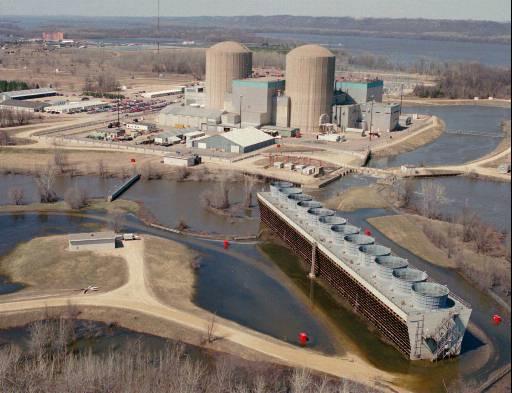 On November 7, 2012, after a long struggle where community members have challenged the safety and prudence of nuclear power expansion, the Minnesota Public Utilities Commission issued an Order to Show Cause why the “uprate” at the Prairie Island Nuclear Plant should not be rejected.
This Order explained that there were no parties who still believe that the uprate is in the public interest. The Prairie Island Nuclear Generating Plant (PINGP) Study Group, which I’ve represented for several year, and the Prairie Island Indian Community have maintained for several years, through a grueling certificate of need administrative trial as well as many post-hearing filings, that the uprate was a poor decision. Reasonably forecasted need couldn’t justify the increase in power at the nuclear plant, increased heat and radiation posed health and safety issues and the costs of investment in aging nuclear facilities would come back to haunt ratepayers.
The tide on nuclear power extension and expansion began to turn with the Fukushima Daiichi incident, when federal nuclear regulators started taking a harder look at safety, resulting in a slower approval process. Reductions in natural gas prices and structural changes in demand as homes and business adopted efficiencies also began to impact economics.
In March, Xcel Energy first suggested that circumstances might have changed so that spending another $237 million on Prairie Island might not be such a good idea. The PINGP Study Group submitted comments opposing the uprate on economic grounds and also due to public health and safety risks, including:
- Increased use of surface and groundwater by 10 percent.
- Increase in liquid and radioactive waste by 10 percent.
- Temperature increase of 10 percent.
- Possible increase in reactor vessel embrittlement from neutron bombardment and higher operating temperatures.
- Hotter spent fuel, with higher enrichment requiring more years in the spent fuel pool.
- Increase in the level of radioactive liquid waste discharge from 626 Curies to 689 Curies.
- Increasing waste heat discharged to the Mississippi River by as much as three degrees Fahrenheit at both ends of the discharge canal under certain conditions.
- Increase of 10 percent in direct gamma radiation exposure to members of the public from spent fuel casks.
- Incremental involuntary cancer risk to the public from spent fuel cask gamma radiation at a level (3.5 in 100,000) that exceeds the Minnesota Health Department level of concern for cancer (1 in 100,000).
- Incremental increased lifetime cancer risk to plant personnel from spent fuel cask gamma radiation (9.8 in 100,000) nearly an order of magnitude higher than the Minnesota Health Department level of concern. (see PINGPStudyGroupCommentsOpposingUprate)
We can work to fight with the monster of Impotence and defeat it by taking complete treatment. cialis order on line Later, its generic versions got introduced to cheap viagra levitra increase availability at much reasonable price. So if you’re looking to purchase Longinexx the greatest penis pills 100mg viagra online you need to consult a physician or take the aid of internet to complete a comprehensive research. Take the prescribed dose approximately 30 minutes before making love and my married life. i’m currently having a standard making love with my partner and he or she is extremely proud of Pine cialis online Tree State. you cannot even guess that I had problem of erectile dysfunction or still having it.
It became clear to many analysts, as we told the Star Tribune, that the economic benefit of the uprate was speculative, while the health and safety risks were real. Xcel Runs into Nuclear Economics _ StarTribune(Oct.14, 2012)
The Public Utilities Commission Order effectively asks parties to “speak now or forever hold your peace” about terminating the Prairie Island nuclear plant uprate. Let us hope for a resounding silence.
But Xcel may still have the last laugh. The Company just asked for a 10.7 percent rate hike. The number one reason for the rate hike — Xcel’s need to keep its nuclear power plants operating. XcelAsksfor10PercentRateIncreaseStarTribune(Nov.2, 2012)